Cover art

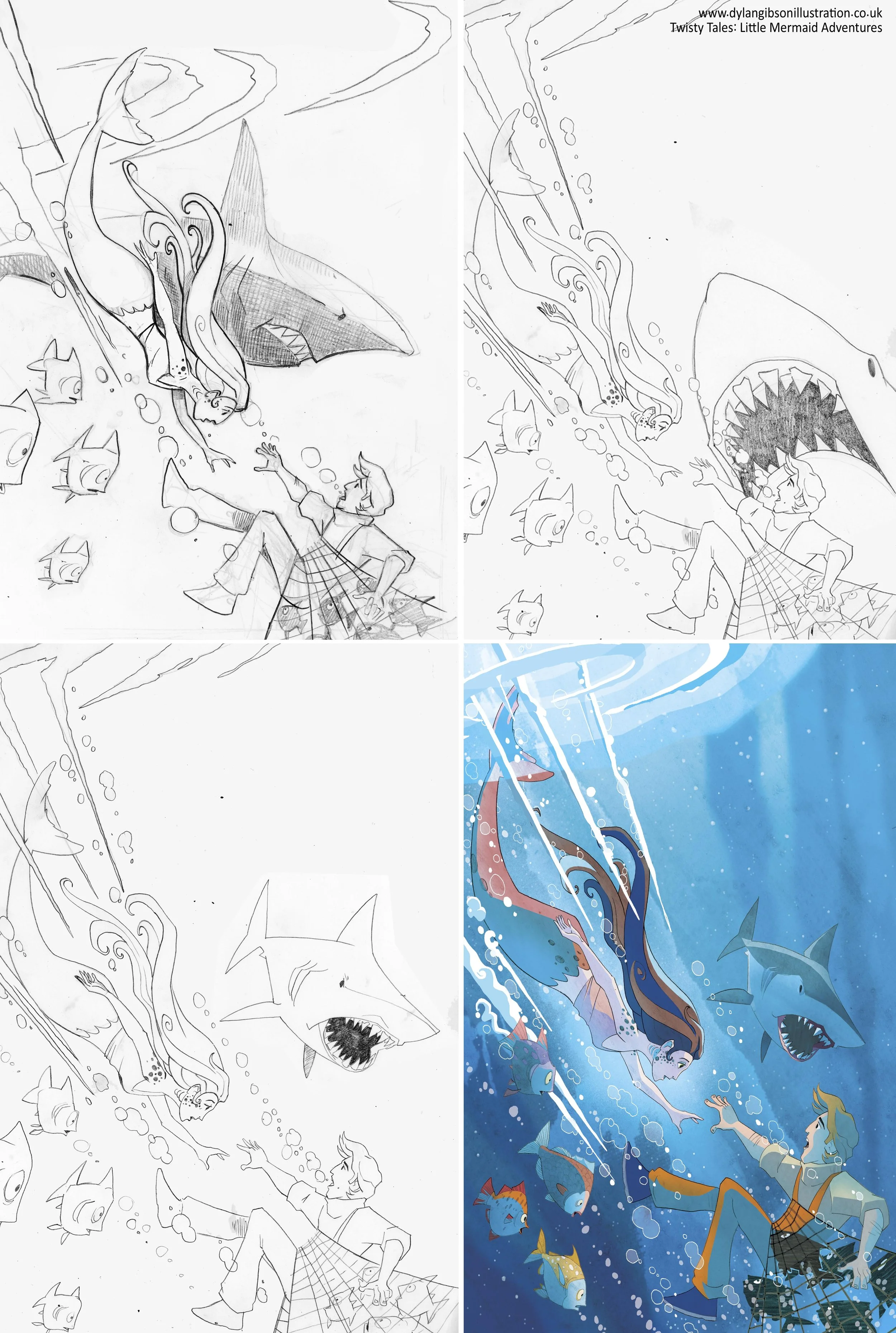
Ever wondered how a book cover got made and why it looks the way it does? All go through a process, a brief, different drafts and then the final art you see. The first sketch nailed down the foreground composition, what followed was a game of place the shark.

About my process, creating drafts and going through ideas is one of the enjoyable aspects on creating art. Illustrating a cover artwork and going through this process will always strengthen the look of the finished artwork. Ideas can be tried out with a few well placed marks from a pencil and discarded or developed accordingly. Having creating hundreds of cover artworks over my professional career I have a good instinct for what works and my first sketch will often be close to what is needed. What follows is a refinement of that with the clients input.
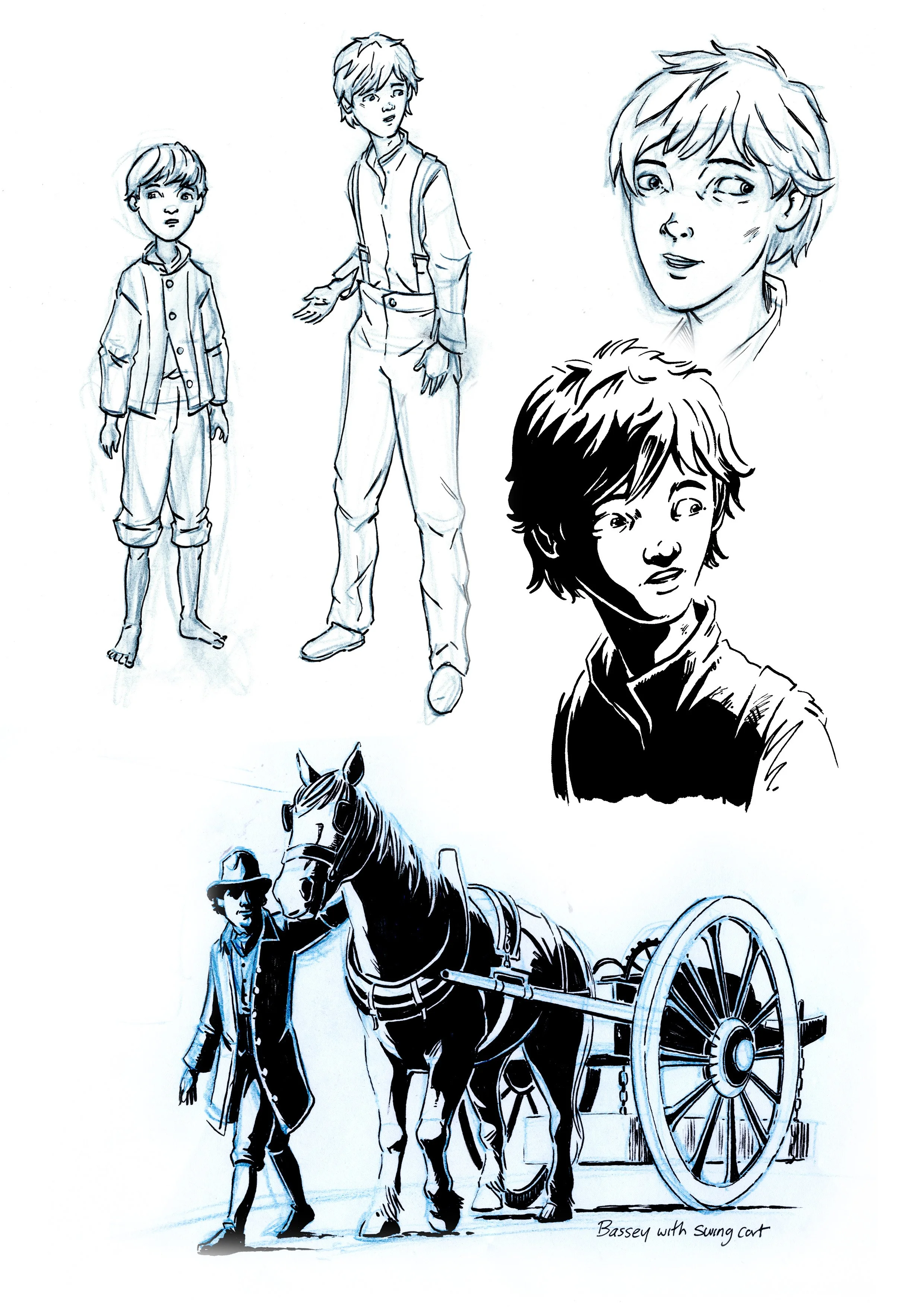
Casting your graphic novel

When I get a story to illustrate, I read through the story and my mind takes me places, I imagine the environment and characters form the text and start to populate that world with characters.

If designing the world is a mixture of research, location, set building, dressing and prop making. Then creating the people that live there is like casting, only you draw not chose your actors.

These are character designs first laid down in pencil and then inked to cast the young boy first at about 8 years old then as a young teen for a story set early 1800’s

Once the casting is in place then its a matter of getting them to act, as in when I draw the story panels that feature the character reacting to the world around them.

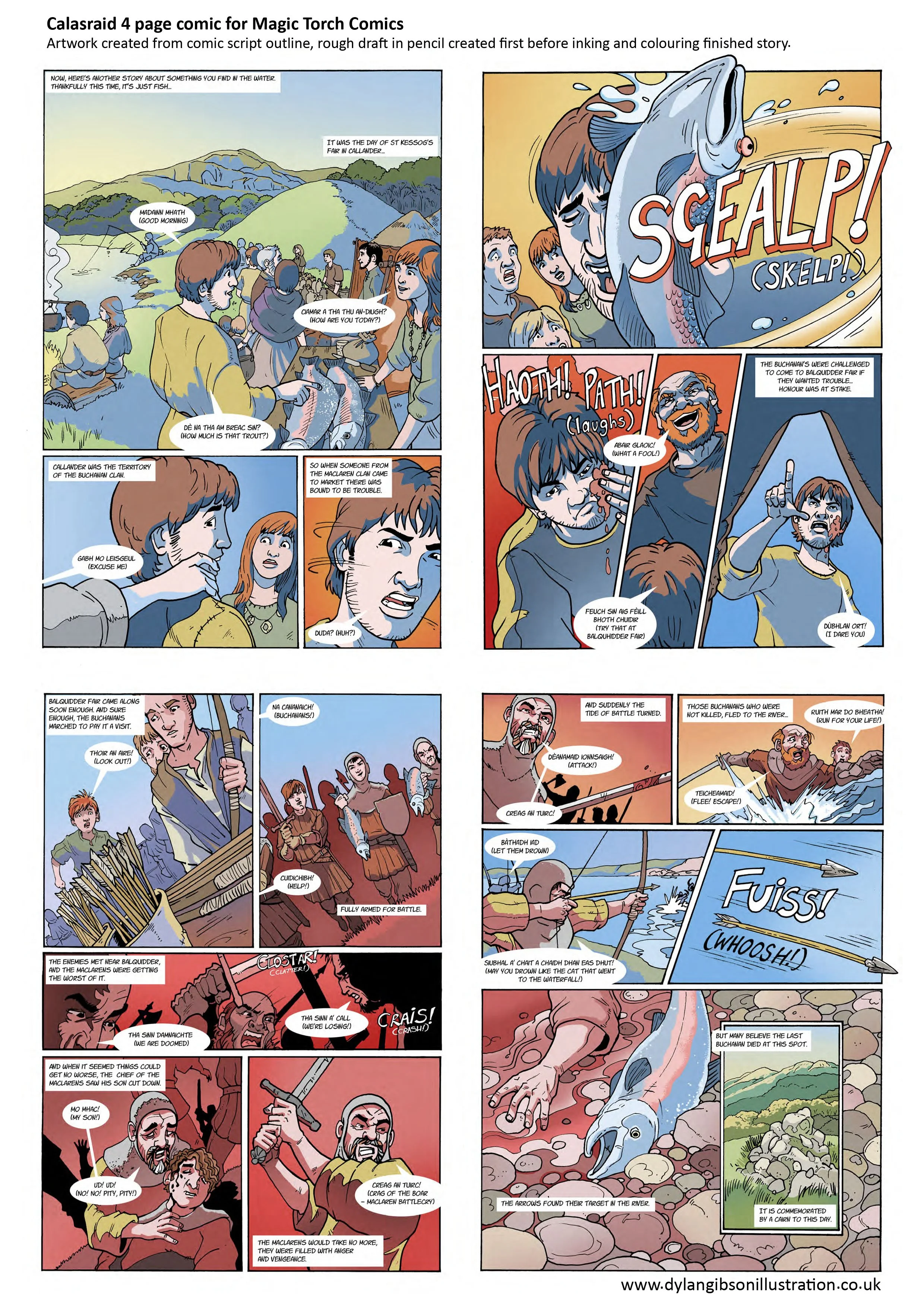
Four pages to tell a tale.

This nice little 4 page comic was commissioned by Magic Torch Comics. The story I illustrated, Calasraid was part of an anthology of tales. Colourful art, action with a bit of silliness masks a darker story that has brutal ending. Read this story and many more for free at Magic Torch Comics

Illustrating a Book Round Up

Illustrating a Book Round Up.

It’s really all about communicating ideas from the moment you start the project, listening to the editor or author discussing their ideas and sharing your own thoughts and taking lead from the story.  The illustration is the end result of that communication; an amalgamation of thought, insight into the story and your own personality that will infer extra detail and nuances that lie between the lines of text. 

An illustrator uses their artistic skill to give those discussions form, through a process of character design illustrations, developing and enhancing the narrative in concept artworks and with feedback refining the artwork further until the illustrations are finished for publication. 

Confidence in your skills and the willingness to push yourself with new techniques or varying or adapting your style that can help communicate the story best will always keep your creative energy flowing keeping the process fresh, fun and show you and your illustrations at their best. There should never be a workman like approach to illustrating a children’s book. Use that opportunity of collaboration to create something you can be proud of putting on your bookshelf.

The quality of the finished book can be determined on how good an illustrator is in storytelling and a good narrative illustrator can enhance the tale that the author has skilfully told into a complete package for the reader to enjoy. 

Pen and ink illustration from The White Arrow Assassin

Pen and ink illustration from The White Arrow Assassin